Loss Prevention Officer vs Uniformed Guard: What's the Difference for a Store?
Quick Answer: A uniformed guard is a visible deterrent stationed at entrances, exits, and high-traffic areas to discourage theft and handle incidents as they happen, while a loss prevention officer typically works in plain clothes, observing behavior, reviewing footage, and building documented cases against shoplifters and dishonest employees. Most stores with a real theft problem benefit from having access to both functions rather than treating the choice as either-or, because the two roles catch different kinds of loss.
Two Jobs That Get Lumped Into One Conversation
When you start looking into store security, "guard" and "loss prevention" tend to get used as if they mean the same thing. They don't, and the mix-up causes real confusion when you're trying to figure out what your store actually needs.
The Uniformed Guard's Job Is Presence
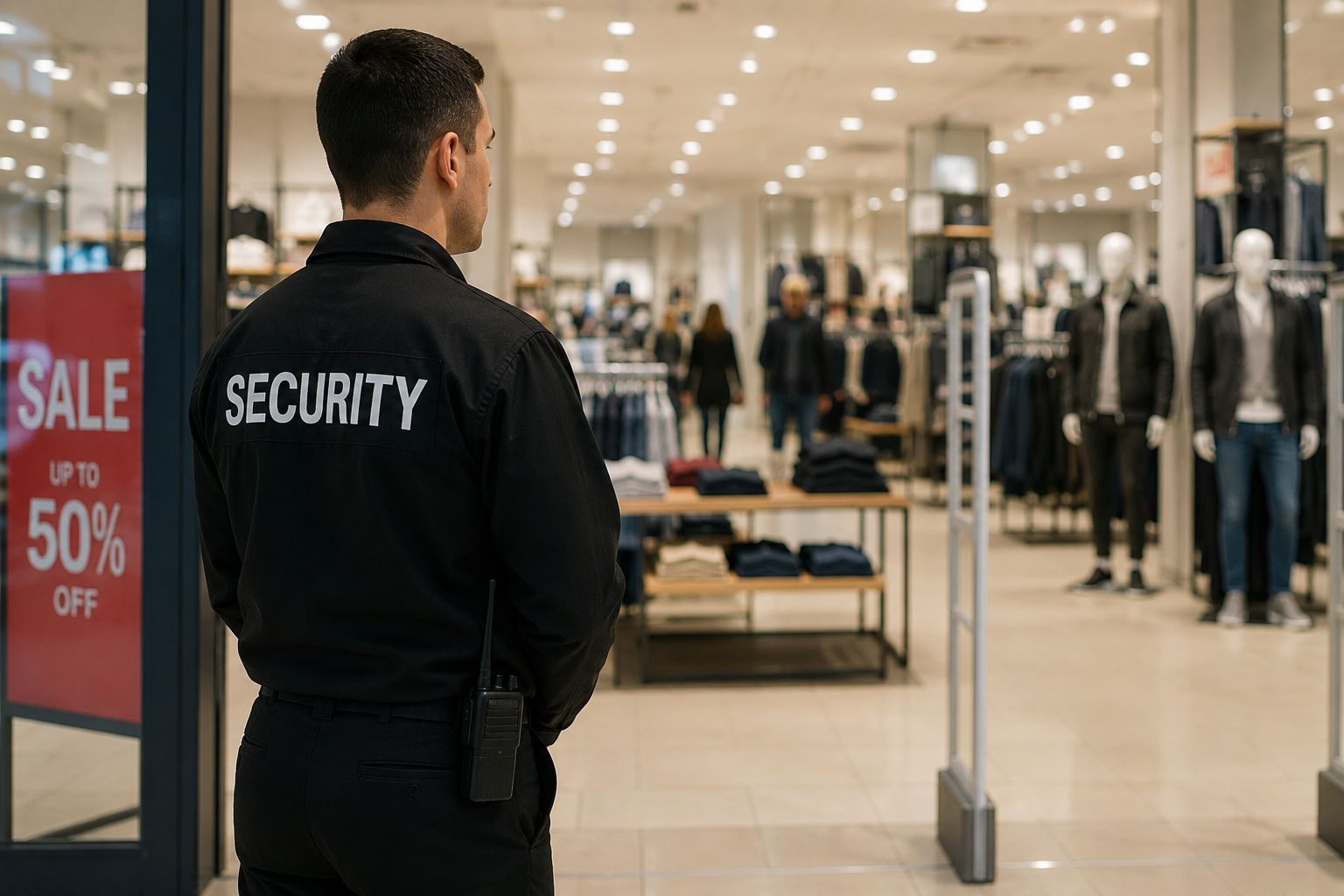
A guard in a visible uniform, stationed near the entrance or walking a patrol route through the store, is doing exactly what the uniform suggests: being seen. That visibility changes behavior before anything happens. Someone weighing whether to conceal merchandise and walk out sees a guard watching the exit and often decides against it on the spot. When something does happen, whether it's a shoplifting attempt, a disruptive customer, or a medical emergency, the guard is positioned to respond immediately.
The Loss Prevention Officer's Job Is Detection
A loss prevention officer, often called an LPO, usually works without a uniform. They move through the store like a shopper, watch camera feeds from a back office, or split time between both. Their focus is spotting the behavior that precedes a theft, tracking patterns across visits, and building a documented case before anyone is approached. A lot of an LPO's work never becomes visible to customers at all.
Neither role is a smaller or lesser version of the other. They're built to catch different things, and a store that only has one is blind to whatever the other one would have caught.
What a Uniformed Guard Actually Covers
Deterrence At The Point Of Entry And Exit
A uniformed guard provides visible deterrence where it matters most. Positioned near entrances and exits, an attentive presence can discourage opportunistic shoplifters before they act, encouraging them to reconsider their intentions or choose another store instead.
Patrols And General Floor Safety
Regular patrols throughout the sales floor and parking area help guards identify more than theft. They can spot trip hazards, blocked exits, unattended packages, suspicious activity, and disorderly behavior, addressing potential safety concerns before they become larger problems.
Immediate Response
When an incident occurs, a guard provides an immediate response. Whether handling customer conflicts, disruptive behavior, suspected intoxication, or medical emergencies, guards can de-escalate situations, coordinate with employees, contact emergency services, and request additional support when necessary.
Customer-Facing Presence
Security guards also contribute to a positive customer experience by serving as visible, approachable resources. They can assist shoppers with directions, monitor parking areas after dark, and provide reassurance, helping customers feel more comfortable and secure while shopping.
What a Loss Prevention Officer Actually Covers
Behavioral Observation Over Time
An LPO tracks patterns rather than isolated suspicious moments. Repeated visits, coordinated movements, unusual behavior, and activity around blind spots can reveal potential theft. This sustained observation helps identify patterns that deterrence-focused uniformed guards may not detect.
Internal Theft
LPOs can identify internal theft that may remain invisible to front-door security. Inventory discrepancies, register manipulation, fraudulent returns, and merchandise removal by employees require camera reviews, transaction audits, and reconciliation processes that go beyond traditional guard duties.
Case Documentation
LPOs document incidents and gather information that helps stores understand recurring losses. Detailed reports, surveillance findings, and incident records create a clearer picture of theft patterns, supporting investigations and helping management address repeated problems more effectively.
Organized Retail Crime Patterns
Organized retail crime often involves coordinated groups, repeated visits, and targeted merchandise. LPOs can connect these activities by reviewing surveillance footage, tracking recurring behaviors, and comparing incidents across days or weeks to identify patterns that individual guards may miss.
Tip: If your store has never separated shrinkage by source, ask your team to break recent losses into rough categories: shoplifting caught in the act, unexplained inventory gaps, and register or return discrepancies. That single exercise tells you more about whether you need a guard, an LPO, or both than almost any other input.
Training and Day-to-Day Differences
The two roles are trained differently because the work itself is different, and understanding that gap helps explain why one person rarely does both jobs well at the same time.
Guard Training Centers On Visibility And Response
Uniformed guard training typically covers observation, access control, patrol procedures, emergency response, and de-escalation. The focus is maintaining a professional presence, recognizing concerns, and responding appropriately when incidents occur within the guard's immediate surroundings.
LPO Training Centers On Investigation
Loss prevention training emphasizes behavioral indicators, surveillance techniques, evidence gathering, and case documentation. LPOs learn to distinguish ordinary browsing from potential concealment, make informed observations, and gather enough information to support investigations and establish cases.
Guards Work In The Open; LPOs Often Don't
Guards rely partly on visibility to deter problems, while LPOs often work discreetly. Blending in as shoppers or monitoring cameras from back offices allows LPOs to observe behavior longer without alerting individuals they're watching.
Schedules Follow Different Logic
Guard schedules typically follow store hours and customer traffic, with stronger coverage during busy periods. LPO schedules may instead target known risk windows, including higher-shrinkage periods, employee onboarding, or times when valuable merchandise receives increased attention.
How the Two Roles Work Together
Warning: Don't assume that hiring one automatically covers the ground the other would have. A store that only staffs uniformed guards has strong deterrence at the door but almost no visibility into internal theft or slow-building organized crime patterns. A store that only staffs an LPO has strong detection but loses the immediate deterrent and emergency-response value a visible presence provides. Treating either role as a full substitute for the other leaves a real gap in coverage.
The stores that get the most out of their security spend usually run both functions together rather than picking one. A uniformed guard's visible presence handles deterrence and immediate response at the door, while an LPO works the layer underneath, catching what a badge and a uniform were never designed to catch in the first place.
Shared Reporting Matters
When guards and LPOs work together, information sharing strengthens security. Guards can flag recurring behavior they notice, while LPOs can identify coverage gaps and recommend adjustments, creating better communication and more coordinated loss prevention efforts.
Coverage Should Scale With Your Risk, Not Your Instinct
Security coverage should reflect your store's actual risk. Small boutiques with visible layouts may need only guards, while larger stores carrying valuable merchandise or experiencing inventory losses may benefit from adding LPO coverage.
Deciding Which Coverage Fits Your Store
Start with what your actual loss looks like, not with which role sounds more serious.
If your problem is visible, in-the-moment theft — people concealing merchandise and walking out, disorderly behavior, or a general sense that your store needs a stronger deterrent presence — a uniformed guard addresses that directly.
If your problem is a pattern you can't quite pin down — inventory numbers that don't add up, suspicion around a specific shift or employee, or a sense that theft is happening but never gets caught in the act — an LPO is built for that kind of slow-building investigation.
If you're seeing both, which is common in mid-size and larger retail environments, running guard and LPO coverage together closes the gap either one would leave on its own. The guard handles what happens in view. The LPO handles what doesn't.
A short walkthrough of your store with a security provider, covering your merchandise mix, your layout, your incident history, and where your losses seem to be coming from, is the fastest way to land on the right combination rather than guessing from a menu of services.
Frequently Asked Questions
Can the same person do both jobs on different shifts?
It happens, but it's not ideal, since visible deterrence and quiet, sustained observation pull in different directions, and stores are usually better served by staff trained and positioned for one role at a time instead.
Does a small store really need a loss prevention officer?
Not always. A small store with a tight, visible layout and low-value merchandise often gets most of its protection from a uniformed guard's deterrent presence alone, with LPO value growing as size or shrinkage increases.
How do I know if my losses are coming from customers or employees?
A rough breakdown of recent shrinkage, incidents caught in the act versus inventory gaps with no clear cause, is the simplest starting point, since gaps without matching incident records often point toward internal loss issues.
Will adding a loss prevention officer slow down my staff or customers?
No. LPOs work quietly, blending into the shopping environment or monitoring from a camera station, so their presence has no impact on store pace or customer experience, and staff interact with them only when needed.
Should a new store start with a uniformed guard, an LPO, or both?
Most new stores start with a uniformed guard, since deterrence and general floor safety are immediate needs from day one, while LPO coverage tends to make more sense once operating data or incident history exists.
Matching Security Coverage to Your Store's Actual Risk
The line between a uniformed guard and a loss prevention officer isn't about which role carries more weight, it's about which kind of theft each one is built to catch. A guard's presence changes behavior at the door before anything happens, while an officer's quiet observation catches what a visible presence never will. Once a store understands its own shrinkage pattern, the choice between the two roles stops feeling like guesswork and starts looking like a straightforward match.
Elite Protection Services
has spent 20
years placing trained officers across stores throughout Beaverton, Oregon, matching guard presence and loss prevention coverage to what each retailer's own loss pattern actually shows. That kind of tenure builds a working sense for which stores need a visible deterrent at the door, which need quieter investigation underneath the surface, and which need both running side by side. The right combination rarely looks the same from one store to the next, and that's exactly the point.