Plainclothes vs Visible Security in a Retail Store: Which Deters More Theft?
Quick Answer: Visible security deters more theft overall, because most shoplifting is opportunistic and a uniformed guard at the door removes the opportunity before anyone acts. Plainclothes security catches more of the people who are not deterred, such as organized crews and repeat offenders who study a store before they hit it. Which one deserves your budget depends on how your losses actually happen. Many stores do best with a visible presence at the entrance and a quiet observer on the floor.
It is a Saturday afternoon and your floor is full. A man in a loose jacket has made three slow laps past the same display. Two of your associates are tied up at the register, a third is helping a customer in the fitting area, and nobody has looked at that aisle in ten minutes. If a uniformed guard were standing near the door, he might have changed his mind before he picked anything up. If a plainclothes officer were browsing two racks away, he might have been watched all the way to the exit and stopped with a clean, documented case.
Those are two different outcomes, and both are good ones. The question for you as a store owner is which one your store needs more, and why. The answer is not the same for a Beaverton boutique, a busy Portland corner shop, and a big box tenant in a Hillsboro shopping center.
Two Philosophies, Two Jobs
Visible and plainclothes security are not two versions of the same service. They rest on different ideas about how theft is stopped.
Visible Security Works On Prevention
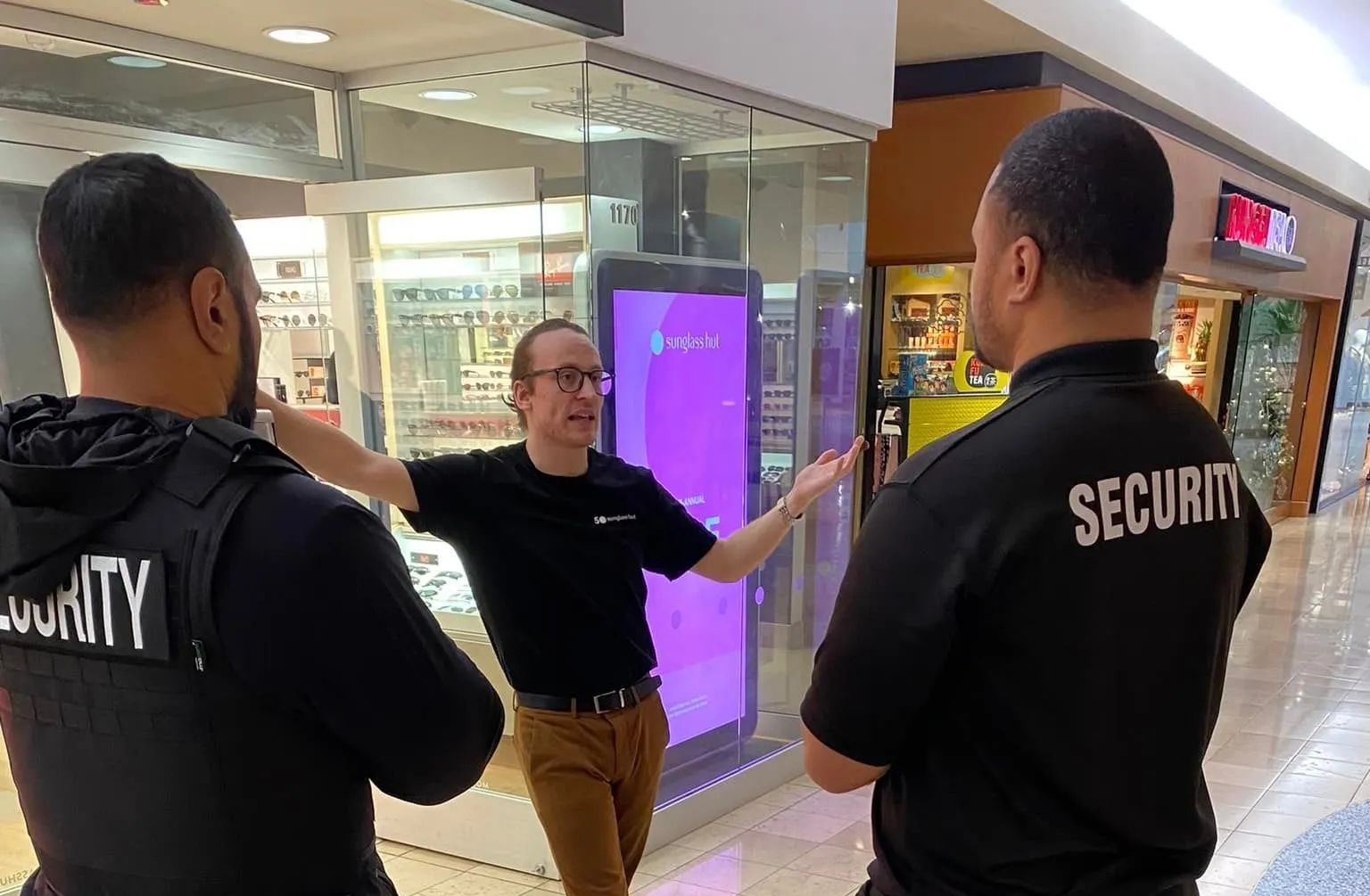
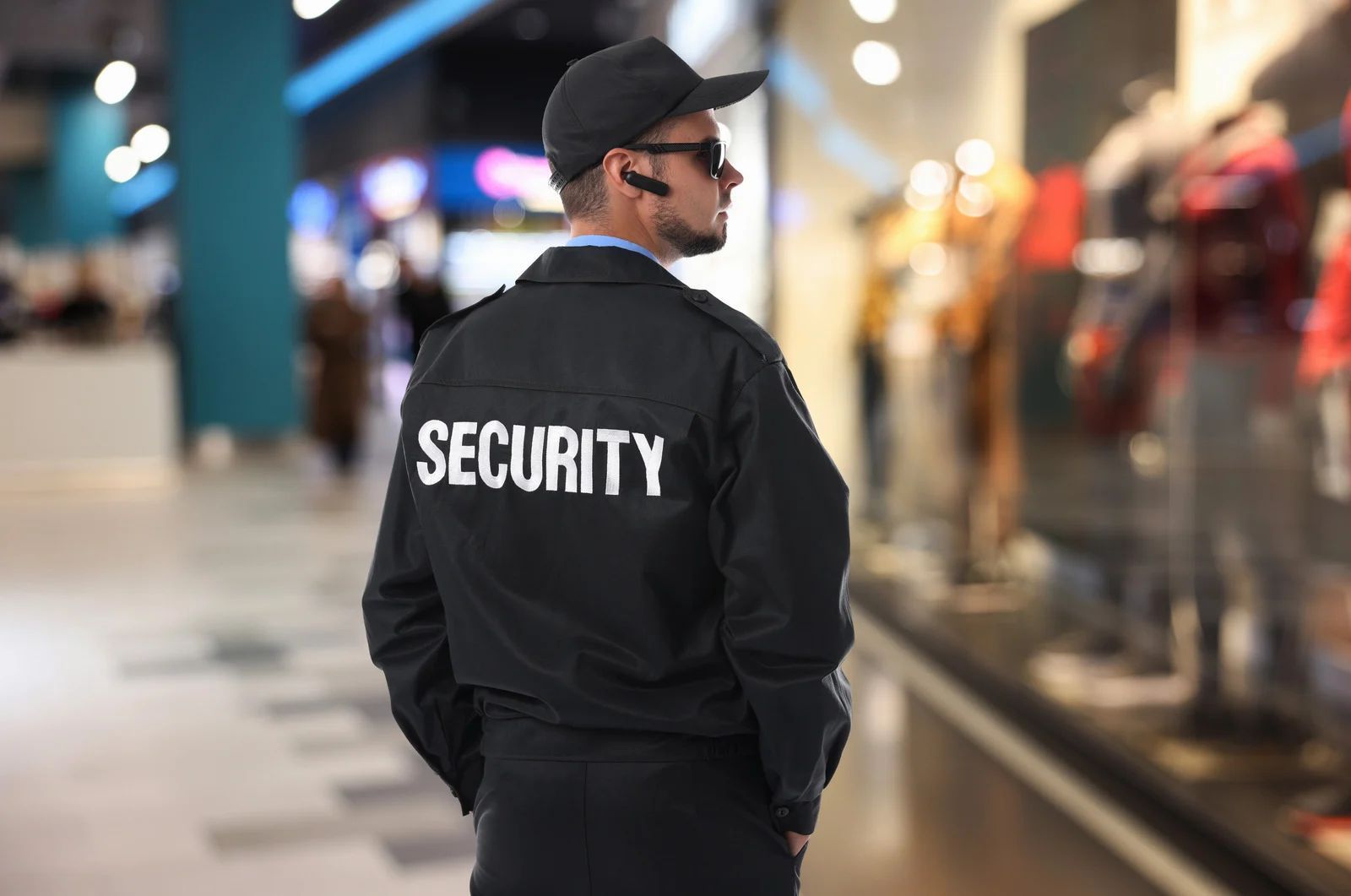
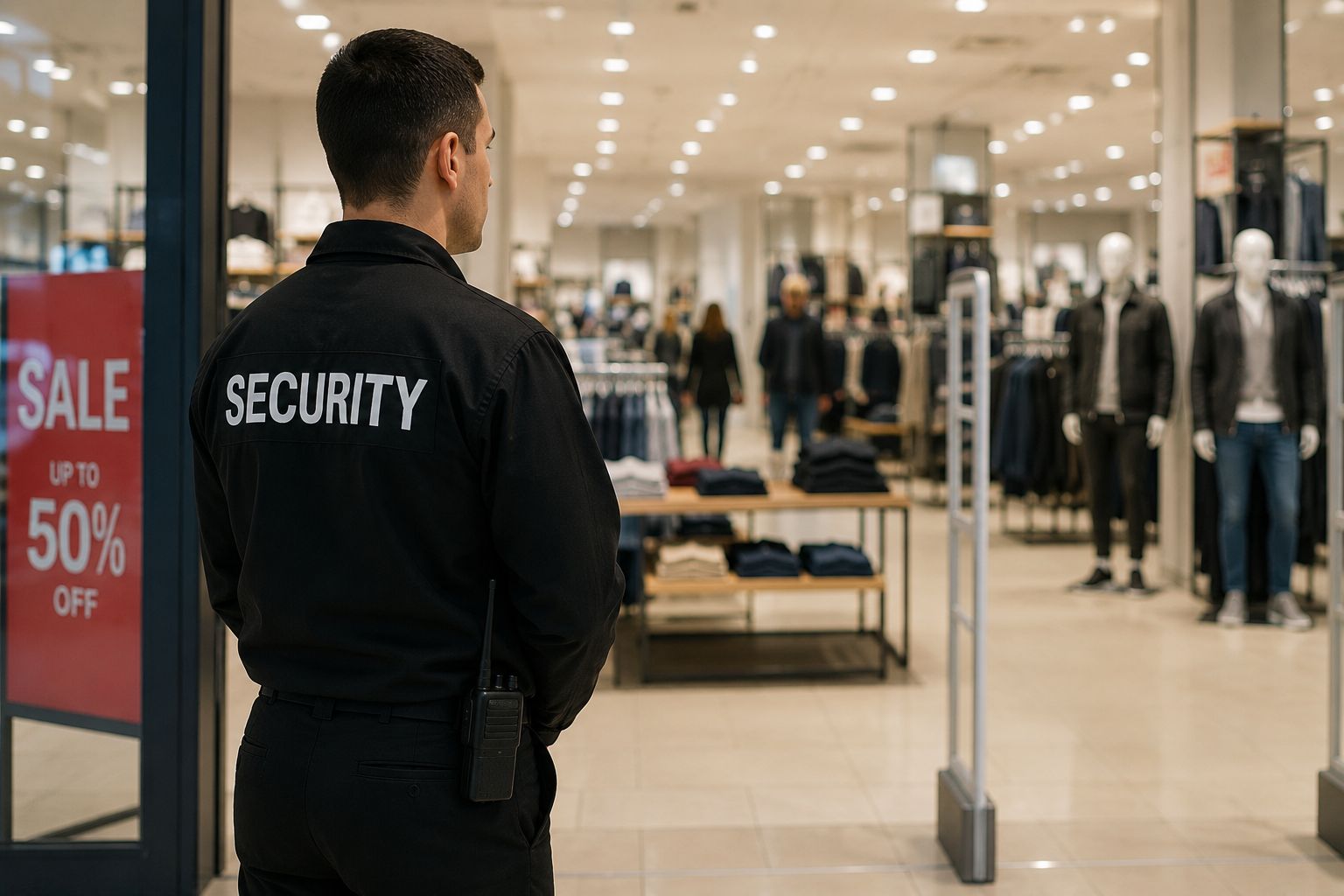
A uniformed guard near the entrance signals that the store is monitored, discouraging potential theft before it begins.
Plainclothes Security Works On Detection
An officer dressed like a shopper observes suspicious behavior discreetly, identifying potential theft and gathering evidence to resolve incidents appropriately.
Neither idea is better in every case. Prevention is the cheaper kind of win for your store in terms of disruption, because nothing has to be confronted. Detection is the stronger answer when the person stealing was never going to be scared off in the first place.
What Visible Security Does Best
Deters the opportunist. The majority of shoplifting is not planned. It is a quick decision made when someone sees a gap: an unattended aisle, an open exit, a staff member looking the other way. A guard near the door closes that gap in plain sight, and the person simply moves on.
Shapes The Whole Store
A visible guard reassures staff and customers, discourages misconduct, supports employees during conflicts, and helps shoppers navigate aisles comfortably.
Responds Instantly
When arguments, medical emergencies, or removal situations arise, a uniformed guard is easily identifiable, allowing people to seek immediate assistance.
Covers Entrances, Exits, And The Lot
Visible security extends protection to entrances, exits, and parking areas, discouraging loitering, vehicle break-ins, and incidents around the property.
The trade off is that a visible guard is also visible to the people studying your store. A crew planning a coordinated hit can see where the guard stands, when he walks the perimeter, and which sections he cannot see from his post. Visibility deters amateurs. It informs professionals.
What Plainclothes Security Does Best
Catches the person who is not deterred. Organized crews and repeat offenders often check a store for weak points before acting. A uniform tells them exactly where to avoid. A plainclothes officer looks like any other shopper, so the pattern they planned around does not exist.
Reads Behavior Before The Theft
A trained observer notices suspicious patterns, such as monitoring staff, unusual bag positioning, coordinated groups, or testing security sensors before theft occurs.
Builds A Clear Case
Observing the entire sequence, from item selection through concealment and exit, helps create complete incident records for police reports and repeat theft documentation.
Finds Internal Loss Too
Discreet floor and backroom monitoring can reveal inventory disappearing through receiving areas, back doors, or after hours, beyond entrance security coverage.
The trade off is that plainclothes security prevents very little by itself. A theft that is watched from start to finish has still happened to your merchandise before it was stopped. And because the officer is not announced, customers and some staff may not know to turn to him when something goes wrong.
Tip: Ask any security provider how their officers handle the moment after a theft is spotted. A good plainclothes officer is trained to observe, report, and follow store policy, not to chase. You want the response to stay calm and safe for your customers and your team.
How the Deterrence Actually Compares
If your question is strictly which approach stops more theft before it happens, visible security wins in most retail settings. Fewer people try, and the ones who do try tend to take less. That is the entire value of a uniform.
If your question is which approach stops more of the theft that is determined, repeated, or organized, plainclothes coverage wins. Those are the losses that tend to cost the most per incident, and they are the ones a visible guard cannot always see coming.
Look At It Through Your Own Loss Pattern
A store with frequent small thefts, quick grabs near the entrance, and a lot of walk in traffic benefits most from a visible presence. A store that has seen the same faces return, groups working together, or high value items disappearing from specific displays benefits most from observation. A store dealing with both has a reason to think about layering the two.
Matching Each Approach to Your Store
Boutiques And Specialty Shops
Small stores selling high-value goods often benefit from visible guards during peak hours, while discreet observers can support security during major sales.
Busy General Retail And Grocery
Large stores with crowded aisles and blind corners benefit from combined coverage, with visible guards managing entrances and observers monitoring shopping areas.
Shopping Center And Strip Mall Tenants
Shared entrances and parking lots create additional risks. Visible patrols cover exterior areas, while plainclothes officers monitor activity inside individual stores.
Stores That Have Been Hit By A Crew
Coordinated theft groups may recognize a uniformed guard’s routines. Adding a discreet observer introduces another layer of coverage and detection.
Warning: Do not decide based on appearance alone. A uniformed guard who stands in one spot all shift, or a plainclothes officer who is not briefed on your store's policies, delivers a fraction of the value. Training, a clear post plan, and a briefing on your layout matter more than the uniform.
Why the Best Setups Use Both
The strongest security plans for stores with real loss problems rarely pick one side. The visible guard and the plainclothes officer cover each other's blind spots.
The visible presence handles the large group of people who would steal only if it were easy. The observer handles the smaller group who would steal regardless. The two roles also communicate: the officer on the floor can quietly alert the guard at the door when a person is heading for the exit, so the guard can be positioned and ready before anyone walks out.
You do not have to start with full coverage. Many stores begin with a visible guard during peak hours, review what the incident reports show over a few weeks, and then add observation where the patterns point. That gives you real information instead of guesses.
Frequently Asked Questions
Is plainclothes security more effective than a uniformed guard?
It depends on what you are trying to stop. A uniformed guard prevents more casual theft because the opportunity disappears. A plainclothes officer is more effective against organized crews and repeat offenders who are not discouraged by a visible presence.
Will a visible guard scare away my customers?
Usually the opposite. Customers tend to feel safer in a store with a professional, approachable presence, and many appreciate being able to ask a guard for help. The key is a guard who is trained to be courteous and to read the room.
Can plainclothes officers stop someone who is stealing?
Their primary role is to observe, document, and coordinate with your team and the guard at the door. Stopping a suspected shoplifter involves a process and training that your provider should explain clearly before any officer is placed in your store.
Do I need both visible and plainclothes security?
Not always. A small store with a short floor may only need one. Stores with large floors, repeat incidents, or organized theft activity often benefit from both, since each covers what the other cannot.
How do I know which approach my store needs?
Start with your incident history and floor layout. A site assessment that looks at where and when losses occur will point toward visible coverage, observation, or a blend of the two.
Can I change my coverage after it starts?
Yes. A sensible approach is to begin with the most clearly needed coverage, review the incident reports, and adjust. Good providers expect to refine the plan as they learn how your store operates.
Choosing the Approach That Fits Your Losses
The debate between plainclothes and visible security sounds like a contest, but for most stores it is really a question of order. Start with what your own records show. If the losses are quick and opportunistic, make your store look watched so the easy chances disappear. If the losses are patient and repeated, make sure someone is actually watching the floor the way a planner would. Then build from there, letting each round of incident reports tell you where to adjust next.
What matters most is that the coverage answers your floor rather than a standard template, since the same uniform that stops a casual grab can be the thing a crew maps around. Elite Protection Services
has spent 20
years
protecting retailers
throughout Beaverton, Oregon, learning how local stores, traffic, and layouts shape where loss actually happens. That history is what turns a guess about guards into a plan matched to the way theft moves through your specific store.